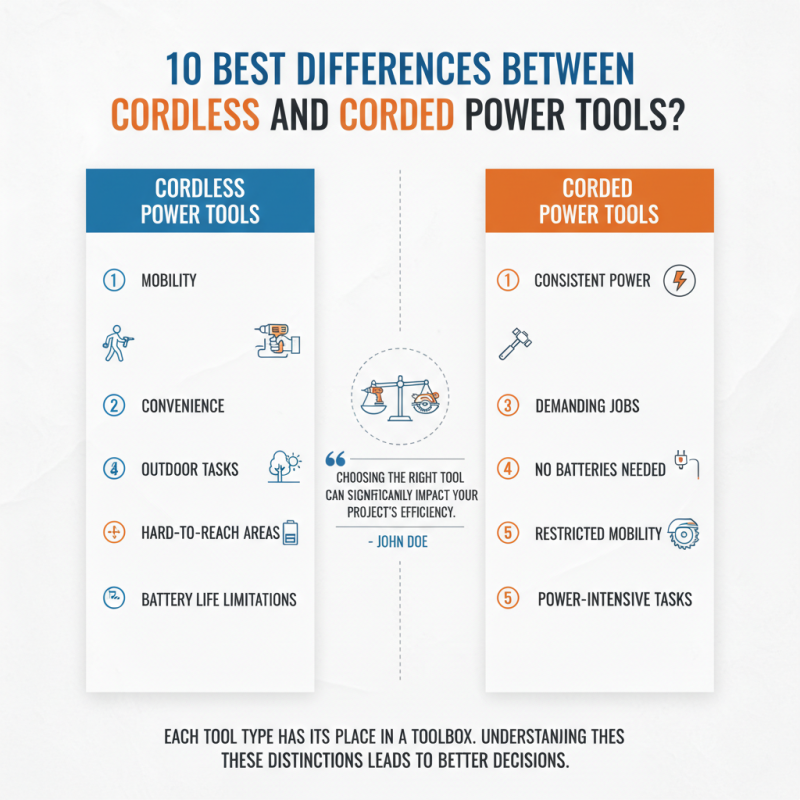
When exploring "what is the difference between cordless and corded power tools," insights from industry expert John Doe are invaluable. John, known for his in-depth knowledge on tools, states, “Choosing the right tool can significantly impact your project's efficiency.” This statement underscores the importance of understanding how these tools differ.
Cordless tools offer mobility and convenience. Without a cord, they allow users to move freely, making them ideal for outdoor tasks or hard-to-reach areas. However, they typically come with battery life limitations. This can disrupt workflow if not managed properly. On the other hand, corded tools provide consistent power, which is crucial for demanding jobs. They don't rely on batteries, but their mobility is restricted.
The choice between these two types may seem straightforward. However, each has its strengths and weaknesses. For instance, corded tools excel in power-intensive tasks, while cordless models shine in versatility. Users should weigh these differences carefully, reflecting on their specific project needs. Each tool type has its place in a toolbox, and understanding these distinctions leads to better decisions.
Types of Cordless and Corded Power Tools Available in the Market
When assessing types of cordless and corded power tools, several categories stand out. Cordless tools generally include drills, saws, and impact drivers. These tools are prized for their portability and ease of use. Users can move freely without worrying about power outlets. However, battery life can be a limitation. Long tasks may require extra batteries.
Corded tools, on the other hand, are well-known for their consistent power supply. Tools like table saws, grinders, and sanders are often corded. They are great for heavy-duty tasks, delivering more torque compared to cordless options. Yet, they come with the inconvenience of being tethered to an outlet. This can restrict movement and working angles.
Both types of tools have their benefits and challenges. Many users favor the flexibility of cordless options. In contrast, professionals often rely on the power of corded tools for demanding jobs. Ultimately, the best choice depends on the specific task and personal preference. Users should reflect on their needs before deciding.
Core Functional Differences: Power Supply and Runtime Analysis
When comparing cordless and corded power tools, the primary distinction lies in their power supply. Corded tools are linked directly to an electrical outlet. This connection provides continuous power, making them ideal for heavy-duty tasks. Electricians and carpenters often prefer corded options for their reliability during long projects. The inconvenience of a power cord is something many find manageable. However, the need for proximity to an outlet can be a limiting factor in some work settings.
On the other hand, cordless tools offer freedom and portability. Powered by rechargeable batteries, they can be used in remote locations without needing an outlet. This flexibility is attractive for DIY enthusiasts and professionals working outdoors. Battery life, however, can be a concern for those engaged in extensive work. Many people struggle with battery management, as a delay in recharging can halt progress. Choosing between the two often involves weighing the value of consistent power against the convenience of mobility.
Comparison of Cordless and Corded Power Tools
Mobility and Convenience: Comparing Portability Between Tool Types
When comparing cordless and corded power tools, mobility and convenience are significant factors. Cordless tools provide the freedom to work anywhere. This is ideal for outdoor projects or awkward job sites without power outlets. According to industry reports, nearly 70% of contractors prefer cordless tools for their flexibility. They are particularly advantageous for on-the-go professionals who value time and efficiency.
However, corded tools still have their place. They often deliver consistent power without the concern of battery life. This makes them suitable for extended use. Many users find that significant projects demand the durability and strength of corded options. A study from a leading tool research organization suggests that while 85% of DIY enthusiasts purchase cordless tools, over 60% of seasoned professionals opt for corded equipment due to its reliability.
Some drawbacks exist for both tool types. Cordless tools can run out of battery mid-project, causing delays. Users might find themselves needing multiple batteries for larger tasks. On the other hand, corded tools limit movement due to their dependence on outlets. This can be frustrating in some situations, leading to wasted time re-positioning to reach an outlet. Balancing these factors is vital for choosing the right tool for your needs.
10 Best Differences Between Cordless and Corded Power Tools
| Feature |
Cordless Power Tools |
Corded Power Tools |
| Portability |
Highly portable, can be used anywhere. |
Limited by cord length, less portable. |
| Power Source |
Battery-powered, requires recharging. |
Plugged into a wall socket for continuous power. |
| Runtime |
Limited by battery life, may need charging. |
No runtime limits, can run as long as plugged in. |
| Weight |
Generally lighter without cords. |
Usually heavier due to the motor and cord. |
| Maintenance |
Minimal, batteries require care. |
Regular maintenance needed for cords and motors. |
| Torque and Power |
Power may vary based on battery type. |
Consistent power and torque available. |
| Noise Level |
Generally quieter due to lower RPM. |
Can be louder due to higher RPM and motors. |
| Cost |
Typically higher initial cost due to batteries. |
Generally lower initial cost. |
| Usage Scenarios |
Ideal for outdoor or remote jobs. |
Best for stationary or workshop tasks. |
| Environmental Impact |
Batteries may have disposal concerns. |
Typically more eco-friendly with long lifespan. |
Performance and Power Output: Which Tool Gets the Job Done Better?
When comparing cordless and corded power tools, performance and power output are key factors. Corded tools often excel in raw power. They provide a continuous energy supply, which translates into higher torque and sustained operation. Data from industry reports suggest that corded models can deliver up to 30% more power than their cordless counterparts, particularly in heavy-duty applications. This consistent performance makes them ideal for tasks that require prolonged use without the risk of battery depletion.
On the other hand, modern cordless tools have made significant advancements. With lithium-ion technology, many cordless options now match the performance of corded tools for most tasks. A recent study highlighted that top-tier cordless drills can produce comparable torque levels, often exceeding 700-inch pounds. However, users may still encounter limitations with runtime on larger projects. This inconsistency can be frustrating, especially when unforeseen battery failures occur during critical tasks. Balancing convenience with power output requires careful consideration of project needs and tool capabilities.
Cost and Maintenance Considerations for Cordless vs Corded Tools
When choosing between cordless and corded power tools, cost and maintenance are crucial. Cordless tools typically have higher upfront costs. A recent industry report indicated that they can be up to 30% more expensive than their corded counterparts. This is largely due to the technology needed for batteries. On average, high-quality batteries cost around $50-$100 each, and replacing them regularly adds to overall expenses.
Corded tools often require less maintenance. They have fewer moving parts and don’t need battery replacements. However, they depend on a reliable power source. A study in 2022 showed that users often face issues with long cords and restricted mobility. This can limit where you can work. In contrast, cordless tools allow freedom of movement but can leave users feeling tethered by battery life, requiring careful planning on job sites.
Long-term, the choice between corded and cordless tools can impact your wallet significantly. A 2023 analysis suggested that, over five years, corded tools incur about 20% less maintenance related costs. Users must weigh convenience against initial investment. Choosing the right tool means assessing your specific work needs and costs.
Conclusion
The article titled "10 Best Differences Between Cordless and Corded Power Tools" explores various aspects that delineate these two types of power tools. When considering what is the difference between cordless and corded power tools, the article highlights key areas such as the types available in the market and their core functional differences. Cordless tools offer unmatched mobility and convenience, while corded tools often excel in sustained power and performance.
Additionally, the piece delves into the cost and maintenance considerations associated with each type. Cordless tools may require regular battery replacements, affecting long-term value, while corded tools can provide continuous power without such interruptions. Overall, understanding these differences helps users make informed decisions when selecting the appropriate tools for their projects.
 Bleep Forge
