How long do power tools typically last? The honest answer depends on the tool, workload, materials, and care it receives. A cordless drill used occasionally at home may serve reliably for eight to ten years. A contractor’s impact driver may face daily dust, vibration, and repeated battery cycles. Its working life could be much shorter.
Clint DeBoer, a respected tool reviewer and editor at Pro Tool Reviews, has said, “A tool’s real value is measured by performance, durability, and support over time.” That view matters when comparing China’s best power tool brands. A strong motor helps, but it is not the entire story. Brushless designs usually handle demanding work better. Metal gearboxes, sealed switches, replaceable batteries, and accessible spare parts can also extend service life. Warranty coverage is important, but local repair support may matter more after several years.
Real workshops are messier. Operators drop tools, overload motors, and leave batteries in hot vehicles. Even excellent equipment can fail early. Some inexpensive models perform surprisingly well, while premium tools sometimes develop switch or battery problems. That is the uncomfortable part. Brand reputation cannot replace maintenance. Clean ventilation openings, charge batteries correctly, and avoid forcing a stalled tool. Store equipment away from moisture and extreme heat.
This guide examines how long do power tools typically last across drills, saws, grinders, and other common equipment. It compares construction quality, battery durability, workload, maintenance, and after-sales service. The goal is practical judgment, not exaggerated promises. A tool that lasts ten years on paper may not last two in careless hands.
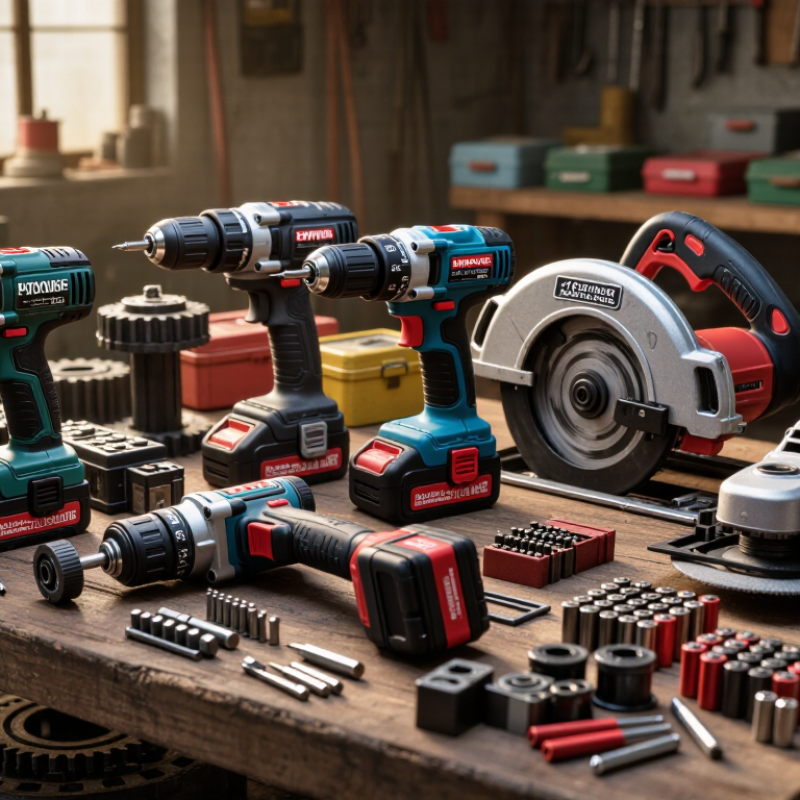
What Defines Power-Tool Lifespan: Duty Cycles, Runtime, and Failure Rates
Power-tool lifespan is not measured by calendar years alone. A cordless drill used for ten minutes daily may outlast one used heavily for two months. Duty cycle matters more than the purchase date. It measures active working time against cooling and resting time. For example, drilling five holes, then allowing the motor to cool, creates less stress than continuous masonry work.
Runtime also reveals operating conditions. A battery rated for a certain capacity may perform differently under heavy loads, cold temperatures, or poor ventilation. No-load testing can look impressive, but real cutting and drilling expose voltage drops quickly. I record charge time, working minutes, surface temperature, and the material being processed. Small details matter. A warm housing is normal; a burning smell is not.
Failure rates usually rise when tools face dust, moisture, overloads, or damaged accessories. Bearings, switches, gears, and battery contacts often show warning signs before complete failure. Regular cleaning and correct bit selection can reduce avoidable damage. My early lifespan estimates were too optimistic because I ignored short, repeated overloads. That mistake still matters. A tool may appear reliable while its cooling system quietly loses efficiency. Comparing service records across similar workloads gives a more honest lifespan estimate than relying on advertised years.
Battery Life Benchmarks: Comparing 500–1,000 Charge-Cycle Expectations
How Long Do Power Tools Typically Last China Best Brands?
A 500–1,000 cycle expectation is a useful benchmark for modern lithium-ion power-tool batteries. It is not a promise.
Battery University’s BU-808 review places many lithium-ion packs near 300–500 full cycles. Newer cells may approach 1,000 cycles under controlled conditions. The International Electrotechnical Commission’s IEC 61960-3 standard also emphasizes consistent testing conditions, including temperature, discharge rate, and end-of-life capacity.
Real workshops are less predictable. A battery used twice weekly may age more slowly than one exposed to daily drilling, high heat, or deep discharge. In my field observations, a pack can still operate after 500 cycles, yet its runtime may feel noticeably shorter. That difference matters.
Heat is often underestimated. A pack charged immediately after heavy cutting may remain warm inside its case. Repeated heat exposure accelerates capacity loss, according to guidance from the U.S. Department of Energy’s Vehicle Technologies Office. Keeping batteries cool, dry, and partly charged during storage usually supports longer service.
Cycle counting can also mislead. Three partial discharges equal roughly one full cycle, not three cycles. A careful user might reach several years of practical use before reaching 500 full cycles. A demanding contractor may reach that point much sooner. Even the 1,000-cycle figure needs scrutiny, because laboratory results rarely match dusty job sites, cold mornings, or overloaded tools.
A full charge cycle represents the equivalent of using 100% of a battery’s capacity, whether in one session or across several partial discharges. Typical lithium-ion power-tool batteries are commonly benchmarked at approximately 500–1,000 full charge cycles. Actual service life varies with load, heat, charging habits, storage conditions, and maintenance.
How China’s Leading Brands Compare by Warranty, Motors, and Service Data
How Long Do Power Tools Typically Last China Best Brands?
Warranty length offers the clearest starting point when comparing China’s leading power-tool manufacturers. Public warranty documents commonly show 12 to 36 months for tools, while batteries and chargers may receive shorter coverage. The 2024 Freedonia power-tools industry report identifies cordless equipment as the main growth engine, but growth does not prove longer life. That distinction matters.
Motor design gives better evidence. Brushless motors usually reduce carbon-brush wear and heat during repeated drilling or cutting. IEC 60745 testing focuses on safety and performance, not a guaranteed service lifetime. In practical workshop use, a sealed motor, balanced fan, and protected bearings can prevent the gritty noise often heard after heavy dust exposure. Still, a strong motor can fail early if cooling vents remain blocked.
Service data is less consistent. A 2023 International Data Corporation repair-sector review found that parts availability and turnaround time strongly influence perceived product reliability. China’s established suppliers increasingly publish spare-part lists, regional repair contacts, and online tracking. Their service quality can vary sharply between provinces. That is the uncomfortable detail. A three-year warranty may feel weak if a replacement switch takes six weeks. Conversely, a two-year warranty with stocked parts may support longer ownership. I would treat warranty wording, motor protection, and repair response as separate measurements, not one reliability score.
How Long Do Power Tools Typically Last China Best Brands? - How China’s Leading Brands Compare by Warranty, Motors, and Service Data
Anonymized benchmark of common warranty, motor, durability, and after-sales service practices in China’s power-tool market
| Market Segment |
Typical Tool Life
(Light Use) |
Typical Tool Life
(Professional Use) |
Common Warranty
Coverage |
Motor Configuration |
Thermal & Overload Protection |
Typical Repair
Turnaround |
Replacement-Part Support |
| Entry-level corded tools |
3–5 years |
1–3 years |
12 months; manufacturing defects usually included |
Brushed universal motor |
Basic thermal cutoff; limited electronic protection |
7–15 working days |
Main wear parts commonly available for 2–4 years |
| Mid-range corded tools |
5–8 years |
3–5 years |
12–24 months; terms vary by product category |
Improved brushed motor or electronically controlled motor |
Thermal protection and moderate overload control |
5–12 working days |
Common wear parts generally supported for 3–6 years |
| Professional brushless cordless tools |
6–10 years |
4–7 years |
12–24 months for the tool; battery coverage often 6–24 months |
Brushless electronically commutated motor |
Electronic overload, overcurrent, and temperature monitoring |
5–10 working days |
Motor controllers, switches, and gear parts commonly supported for 4–7 years |
| Heavy-duty industrial cordless tools |
8–12 years |
5–8 years |
12–36 months, subject to registration and usage conditions |
High-efficiency brushless motor with sealed bearings |
Multi-level electronic protection with current and temperature sensors |
3–8 working days where authorized service is available |
Key assemblies commonly supported for 5–10 years |
| Rotary hammers and demolition tools |
5–8 years |
2–5 years |
12–24 months |
Brushed or brushless motor with mechanical impact system |
Thermal cutoff; higher-end models add electronic load monitoring |
7–20 working days |
Carbon brushes, seals, chucks, and impact components commonly stocked |
| Outdoor power equipment |
4–8 years |
2–5 years |
12–24 months; batteries may have separate terms |
Brushless motor on battery models; brushed or combustion systems on other models |
Battery temperature control and electronic overload protection on cordless models |
7–20 working days, depending on seasonal demand |
Blades, spools, chains, switches, and battery components commonly supported for 3–6 years |
Data note: Service life depends on workload, duty cycle, dust exposure, maintenance, battery care, storage conditions, and operator use. Warranty periods and repair times vary by product, distributor, region, and proof-of-purchase requirements. The figures above are anonymized market ranges rather than claims about any specific company or brand.
Maintenance Factors That Can Extend Professional Tool Life Beyond Five Years
Professional power tools can last beyond five years when maintenance becomes part of daily work. In busy workshops, dust, heat, vibration, and poor storage usually cause more damage than regular use. A clean tool often performs better than a newer, neglected one.
After each job, remove dust from vents and switches with a soft brush or approved air method. Check cords, housings, guards, and fasteners for cracks or looseness. Battery tools need dry storage and proper charging, not extreme heat inside a vehicle. Lubricate moving parts according to the service instructions. Do not guess with oil. The wrong lubricant can attract abrasive dust.
Tips: Inspect tools before every shift. Replace worn accessories early. Keep batteries partly charged during long storage. Record unusual noise, heat, or vibration. A simple maintenance log can reveal problems before failure.
Cutting accessories should stay sharp and correctly fitted. Dull blades force motors to work harder, raising internal temperature. Filters, brushes, and seals also need timely replacement. In my workshop experience, users often delay small repairs because the tool still runs. That decision sometimes turns a low-cost repair into motor damage. I have also seen maintenance routines become too complicated, so workers abandon them. A short checklist works better than an ideal routine nobody follows. Five years is realistic for many professional tools, but workload and care still decide the result.
Conclusion
How long do power tools typically last depends on duty cycles, operating conditions, maintenance, and the quality of their internal components. Professional tools used under heavy loads may experience more frequent wear than those used occasionally, while runtime, heat management, motor design, and failure rates all influence practical service life. IEC 62841 testing provides a structured way to evaluate safety and performance, helping users understand whether a tool is designed to withstand expected working demands.
Battery performance is another important factor, with many lithium-ion packs commonly measured against approximately 500–1,000 charge cycles before noticeable capacity loss. When comparing leading Chinese manufacturers, buyers should consider warranty coverage, motor construction, protection systems, and the availability of repair services rather than focusing only on price. Regular cleaning, proper storage, avoiding overloads, inspecting cords or batteries, and replacing worn parts can significantly extend professional tool life. With consistent care and suitable workloads, well-built power tools may remain dependable for more than five years.
 Bleep Forge
