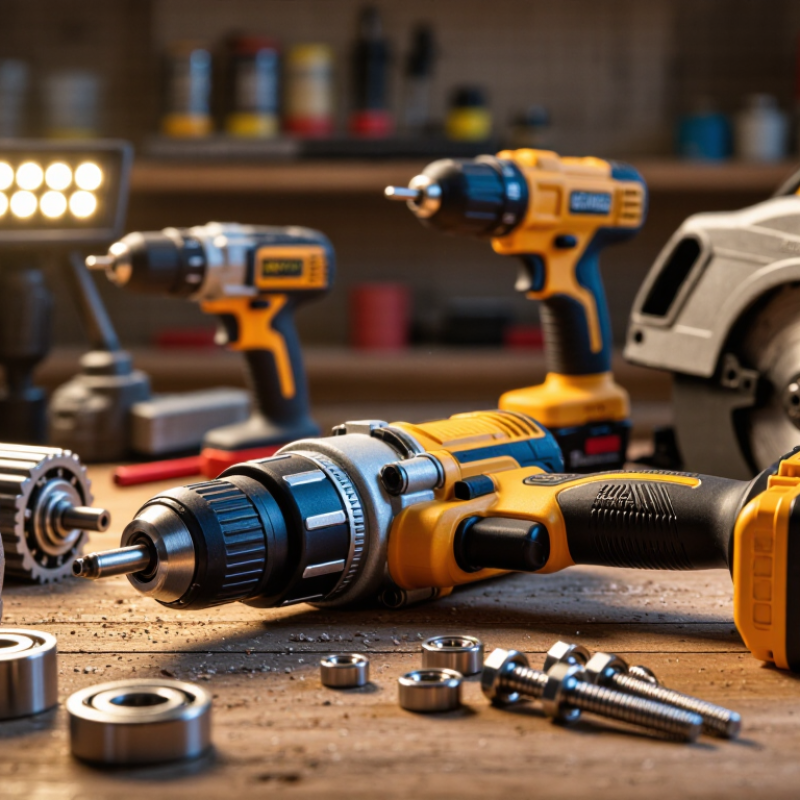
How to Evaluate the Durability of Power Tools Before Buying

Time:2026-10-03 Author:Amelia
0%

Buying a power tool should not begin with color, speed, or a persuasive discount. It should begin with a harder question: how to evaluate the durability of power tools before money changes hands. Durability means more than surviving one accidental drop. It includes motor consistency, gearbox strength, battery life, trigger reliability, heat control, and service support. A tool can look powerful on a showroom shelf and still fail under repeated workload.

Kenny Koehler, a power-tool reviewer and editor at Pro Tool Reviews, has emphasized this practical principle: “Real-world performance matters more than impressive specifications.” That idea deserves attention. Examine the housing for thin seams, flexing plastic, and exposed fasteners. Hold the tool and check whether the grip feels stable, not merely comfortable. Listen for grinding, uneven vibration, or a sharp electrical smell during operation. Ask whether replacement batteries, brushes, chucks, or switches remain available. Small parts often decide a tool’s useful life.

Look beyond the warranty.

A long warranty helps, but it does not repair lost working time. Read independent tests that measure performance after repeated cuts, drilling cycles, or heavy fastening. Compare those results with your own expected workload. A contractor may need sealed bearings and robust cooling, while a homeowner may value repair access more. I have found that no single durability score fits every user. That is the uncomfortable part. Marketing claims can be incomplete, and even respected reviews may reflect different conditions. Evaluate evidence carefully, accept some uncertainty, and choose the tool that remains dependable when the workshop becomes hot, dusty, and inconvenient.

How to Evaluate the Durability of Power Tools Before Buying

Define Durability and Identify the Demands of Your Intended Tasks

Durability means more than surviving a showroom test. It means maintaining safe performance under the pressure, dust, heat, and repetition your tasks create. Define the demand before judging the tool.

Drilling softwood for weekend shelves is mild work. Cutting masonry for four hours is not. Record the material, task duration, load, workspace, and expected weekly use. A short list exposes unrealistic expectations.

Check the technical evidence. IEC 62841 requires portable motor-operated tools to undergo safety and performance testing, but compliance does not guarantee unlimited service life.

Look for published duty ratings, impact resistance information, service-part availability, and thermal protection details.

For vibrating tools, the European Union sets an exposure action value of 2.5 m/s² and a limit value of 5 m/s² over an eight-hour reference period.

That data helps estimate fatigue and operating strain. It does not prove the motor will last.

Use your hands and eyes, too. Examine chuck movement, trigger consistency, housing joints, vents, and battery contacts. A loose chuck can reveal poor long-term control. A sealed vent may trap heat during heavy cutting.

Ask whether your real workload matches the test conditions. I once underestimated dust exposure because the tool felt solid in a clean workshop. That judgment was incomplete.

Durability should be evaluated against the hardest ordinary task, not the easiest demonstration.

Examine Materials, Construction Quality, and Protective Features

Before buying a power tool, inspect the materials rather than trusting its appearance. High-impact polymer should feel solid, not thin or brittle. Aluminum or reinforced gear housings can handle repeated impact and heat. Steel gears should move smoothly without grinding sounds. I once chose a lightweight drill because it felt comfortable, but its plastic chuck loosened after several projects. That mistake changed how I compare tools.

Construction quality appears in small details. Check whether screws sit evenly and whether seams close without visible gaps. Test the trigger for a steady response. A crooked chuck, rattling switch, or excessive shaft movement may signal poor tolerances. The power cord needs strong strain relief near the handle. For cordless tools, examine the battery connection and locking mechanism. They should fit firmly, without side-to-side movement. Ask whether replacement parts and service information are available. A long warranty helps, but it cannot repair uncomfortable handling or weak components.

Protective features deserve equal attention. Look for overload protection, thermal shutoff, and a secure blade or wheel guard. Rubberized grips can reduce vibration and improve control with dusty hands. Sealed vents may limit dust entry, although sealing can reduce cooling if poorly designed. Check the safety lock and emergency release before purchase. Do not assume every feature works perfectly; test it carefully and read the technical manual. Sometimes, I still overlook balance because specifications seem more objective. That is worth reconsidering. A durable tool should survive demanding work and remain predictable in the user’s hands.

Assess the Tool’s Motor, Battery, Gearing, and Moving Components

Before buying a power tool, I inspect its motor under realistic conditions.

A smooth idle is useful, but it proves little. Run the tool briefly, then listen for grinding, pulsing, or sharp electrical smells. Excessive heat around the motor housing can indicate poor ventilation or overloaded components. Check the vents for dust buildup and weak airflow. I once trusted a quiet motor and missed a slight speed drop under pressure. That mistake changed my inspection routine.

Battery performance deserves equal attention.

Ask about tested runtime, charging temperature, and replacement availability. A healthy battery should lock firmly into place without excessive movement. Avoid packs with swelling, cracked cases, or damaged contacts. Check whether the charger connection feels secure.

Next, examine the gearing and moving components. Rotate the chuck, shaft, blade mount, or adjustment mechanism by hand. It should move evenly, without grinding or side-to-side play.

Slight movement may be normal, but visible wobble deserves careful questioning. Inspect gear housings for oil leaks, broken seals, or loose screws. Then operate the trigger, clutch, brake, and safety switch several times. They should respond consistently.

Small flaws matter. Bring a work glove and flashlight. These simple tools reveal details that showroom lighting can hide.

I still find short tests imperfect, especially when no material is available. Where possible, compare the tool’s behavior during a controlled load test, and record unusual heat, vibration, or noise before making a decision.

Compare Testing Evidence, Warranty Coverage, and Repair Options

A durable power tool needs evidence, not a heavy-looking housing. Look for independent tests that state runtime, overload performance, temperature rise, and drop conditions. Testing aligned with IEC 62841 is more useful than vague claims about “professional strength.” Check whether reviewers used the same battery, bit, or disc during comparisons. Small details matter. A motor that smells hot after ten minutes deserves caution.

Warranty coverage should be read like a repair contract. Confirm the coverage period, excluded parts, labor charges, battery terms, and proof-of-purchase rules. A five-year warranty may protect only the motor, while switches, chucks, chargers, and batteries remain excluded. European Commission research found that 77% of consumers preferred repairing products rather than replacing them, although many still replaced them in practice (Behavioural Study on Consumers’ Engagement in the Circular Economy, 2018). That gap should influence your decision.

Repair access is often more valuable than a generous promise. Before buying, search for an authorized service center, published parts diagrams, replacement brushes, and realistic delivery times. Ask whether the battery pack can be serviced safely, rather than discarded after a single cell failure. The Global E-waste Monitor 2024 reported 62 million tonnes of electronic waste generated in 2022, with only 22.3% formally recycled. My checklist is imperfect. Local repair shops may lack proprietary tools, and online parts listings can be outdated. Still, a tool with replaceable components, clear manuals, and reachable technicians usually offers stronger long-term value.

How to Evaluate the Durability of Power Tools Before Buying

Compare testing evidence, warranty coverage, and repair options using a transparent 0–5 buyer-evidence score.

Scores are based on a practical evaluation rubric: repeatable endurance testing, clearly stated warranty terms, availability of repair documentation and replacement parts, and access to authorized or independent service. A higher score indicates stronger verifiable support before purchase.

Estimate Long-Term Value Through Maintenance Needs and User Reviews

A durable power tool is not merely one that survives a hard first week. Its long-term value depends on service time, replacement parts, and the cost of small failures. Before buying, I check the manual for brush, filter, chuck, battery, and lubrication guidance. Clear intervals suggest thoughtful engineering, although manuals can sound more optimistic than workshop reality. I also inspect housing seams, trigger movement, cable strain relief, and ventilation openings. These details reveal how dust and repeated impacts may affect future repairs.

User reviews become more useful when they describe months of work, not excitement after delivery. Look for specific tasks, hours of use, battery cycles, overheating, loose fittings, and repair experiences. A review saying “works great” tells little. A review showing a worn gear after six months tells much more. Read both praise and complaints. Patterns matter. One defective unit may be bad luck, while repeated reports of charger faults deserve attention. Verify dates, because older reviews may describe an earlier design.

Estimate maintenance in money and time. Add likely consumables, shipping, downtime, and a replacement battery. A cheaper tool may lose its advantage after two repairs. I once ignored a simple filter cost and underestimated ownership by nearly a quarter. That mistake changed my buying checklist. Still, user reviews are imperfect evidence; skilled users may be kinder to difficult tools. Compare them with independent testing, service documentation, and available repair support. Keep your estimate conservative, especially for concrete dust, daily drilling, or outdoor moisture.

How to Evaluate the Durability of Power Tools Before Buying - Estimate Long-Term Value Through Maintenance Needs and User Reviews

Tool Category Typical Heavy-Use Service Life Main Wear Components Routine Maintenance Needs Common User-Review Warning Signs Repairability Indicator Expected Annual Maintenance Cost* Long-Term Value Rating
Cordless Drill/Driver 5–8 years with regular professional use Battery pack, chuck, gears, trigger, motor brushes on brushed models Clean vents, inspect chuck, charge batteries correctly, replace worn bits Chuck wobble, overheating, rapid battery decline, inconsistent speed control High when batteries and chucks are separately replaceable $15–$50, excluding battery replacement High
Cordless Impact Driver 4–7 years with frequent fastening work Anvil, impact mechanism, gearbox, battery pack, motor Remove debris, inspect anvil, lubricate accessories when specified, protect battery contacts Loose bit retention, unusual impact noise, excessive heat, reduced torque Moderate to high if gearbox and anvil parts are serviceable $15–$45, excluding battery replacement High
Circular Saw 6–10 years with proper blade care Blade, arbor, shoe, bearings, power cord or battery, brushes Clean sawdust, inspect guard movement, check blade alignment, replace blades when dull Binding, inaccurate cuts, guard sticking, burning smell, excessive vibration High when the shoe, guard, bearings, and cord can be replaced $20–$80, mostly for blades and minor parts High
Reciprocating Saw 5–8 years with intermittent to heavy use Blades, blade clamp, shoe, gearbox, bearings, motor Clean the blade clamp, inspect shoe, replace damaged blades, clear cooling vents Blade release failure, excessive vibration, weak stroke action, overheating Moderate when the clamp, shoe, and gearbox are available as parts $25–$90, primarily for replacement blades Moderate to High
Angle Grinder 4–8 years under demanding use Discs, spindle, bearings, gearbox, guard, brushes Clean vents, inspect guard and spindle lock, replace damaged discs, check cord or battery Bearing noise, spindle-lock failure, overheating, disc misalignment, switch faults Moderate; mechanical parts are often serviceable, but labor can be significant $30–$120, mainly for discs and guards Moderate to High
Random Orbital Sander 4–7 years with regular workshop use Abrasive discs, hook-and-loop pad, bearings, dust-seal components Empty dust collector, clean vents, replace worn pad, use dust extraction where possible Pad detachment, excessive vibration, poor dust collection, slow orbiting High if the backing pad and dust components are replaceable $25–$100, depending on abrasive consumption Moderate to High
Rotary Hammer 6–10 years with periodic heavy drilling Chuck seals, impact piston, gear assembly, brushes, bits Clean and lubricate the chuck as specified, inspect seals, clear vents, replace worn bits Reduced impact force, grease leakage, chuck retention problems, high vibration Moderate to high if seals, chuck parts, and service kits are available $30–$150, including bit and lubrication costs High
Portable Jobsite Table Saw 7–12 years with careful setup and storage Blade, arbor, fence, throat plate, bearings, switch, stand hardware Clean sawdust, align blade and fence, inspect safety systems, wax or protect sliding surfaces Fence drift, difficult height adjustment, inconsistent brake response, motor bogging High when alignment parts, switches, guards, and arbor components are supported $40–$160, mainly for blades and alignment parts High
Cordless Outdoor Trimmer 3–6 years with seasonal residential use Line spool, cutting head, battery, motor, guard, shaft couplings Clean grass buildup, inspect guard, replace line, store battery indoors and dry Line-feed problems, weak runtime, head wobble, motor shutdown under light load Moderate when the head, spool, guard, and battery are sold separately $20–$100, excluding battery replacement Moderate
Air Compressor 8–15 years with correct servicing Pump seals, valves, belts, pressure switch, drain valve, hose fittings Drain condensate, check oil where applicable, clean intake filter, inspect hoses and fittings Slow tank filling, frequent cycling, air leaks, oil contamination, pressure loss High when pump components, belts, valves, and pressure controls are available $30–$140, including filters, oil, seals, and fittings High

*Annual maintenance costs are typical planning ranges in U.S. dollars for normal ownership and exclude purchase price, paid labor, major accident damage, and replacement battery packs. Service life varies with workload, storage conditions, operating technique, and parts availability.

Evaluation Guide: Before buying, check whether replacement parts are listed, read reviews from users with similar workloads, separate long-term ownership comments from first-week impressions, and look for repeated reports involving overheating, battery degradation, chuck or bearing wear, inaccurate adjustments, and poor service support.

FAQS

What does durability mean for a power tool?

Durability means safe performance under pressure, dust, heat, and repeated use. It is not just surviving a showroom test. Judge the tool against your hardest ordinary task.

How should I define my actual workload?

Record the material, task duration, load, workspace, and weekly frequency. Drilling softwood for shelves is mild work. Cutting masonry for four hours demands much more. Your expectations may still be unrealistic.

Which technical evidence should I check?

Look for duty ratings, impact resistance, thermal protection, and service-part availability. Testing aligned with IEC 62841 can provide useful safety evidence. It does not promise unlimited service life.

What physical details can reveal future problems?

Check chuck movement, trigger consistency, housing joints, vents, and battery contacts. A loose chuck suggests poor control. Blocked vents may trap heat during heavy cutting. Use your hands and eyes.

How can I judge warranty quality?

Read the warranty like a repair contract. Check coverage periods, excluded parts, labor charges, battery terms, and proof-of-purchase rules. A long warranty may exclude switches, chargers, batteries, or chucks.

Why do repair options matter so much?

Search for service centers, parts diagrams, replacement brushes, and realistic delivery times. Replaceable components can extend useful life. Local repair support may be limited, though.

What should useful user reviews describe?

Prefer reviews covering months of work, battery cycles, overheating, loose fittings, and repairs. “Works great” provides little evidence. Repeated charger complaints deserve attention. Check the review dates.

How can I estimate long-term ownership cost?

Add consumables, shipping, downtime, maintenance, and a replacement battery. A cheaper tool may lose its advantage after two repairs. I once ignored filter costs. My estimate was nearly one-quarter too low.

Conclusion

Learning how to evaluate the durability of power tools begins with defining what durability means for your specific needs. Consider the materials, build quality, protective features, and whether the tool can withstand the conditions of your intended tasks. A careful inspection should also include the motor, battery system, gearing, switches, bearings, and other moving components, since these parts strongly influence long-term performance and reliability.

You should also review available testing evidence, warranty coverage, replacement parts, and repair options before making a purchase. A tool with simple maintenance requirements may offer greater value over time, even if its initial price is higher. Finally, study user feedback for recurring issues such as overheating, premature wear, battery decline, or loose components. By combining construction details, performance evidence, serviceability, and real-world experience, you can make a more informed decision and choose a power tool that is dependable for both current and future work.

Amelia

Amelia

Amelia is a seasoned marketing professional with a wealth of expertise in our company’s core offerings. With an unwavering passion for driving growth and innovation, she plays a pivotal role in shaping our marketing strategies and enhancing brand visibility. A key aspect of her responsibilities......